Camouflage Patterns Explained: Choosing the Right One for Your Environment
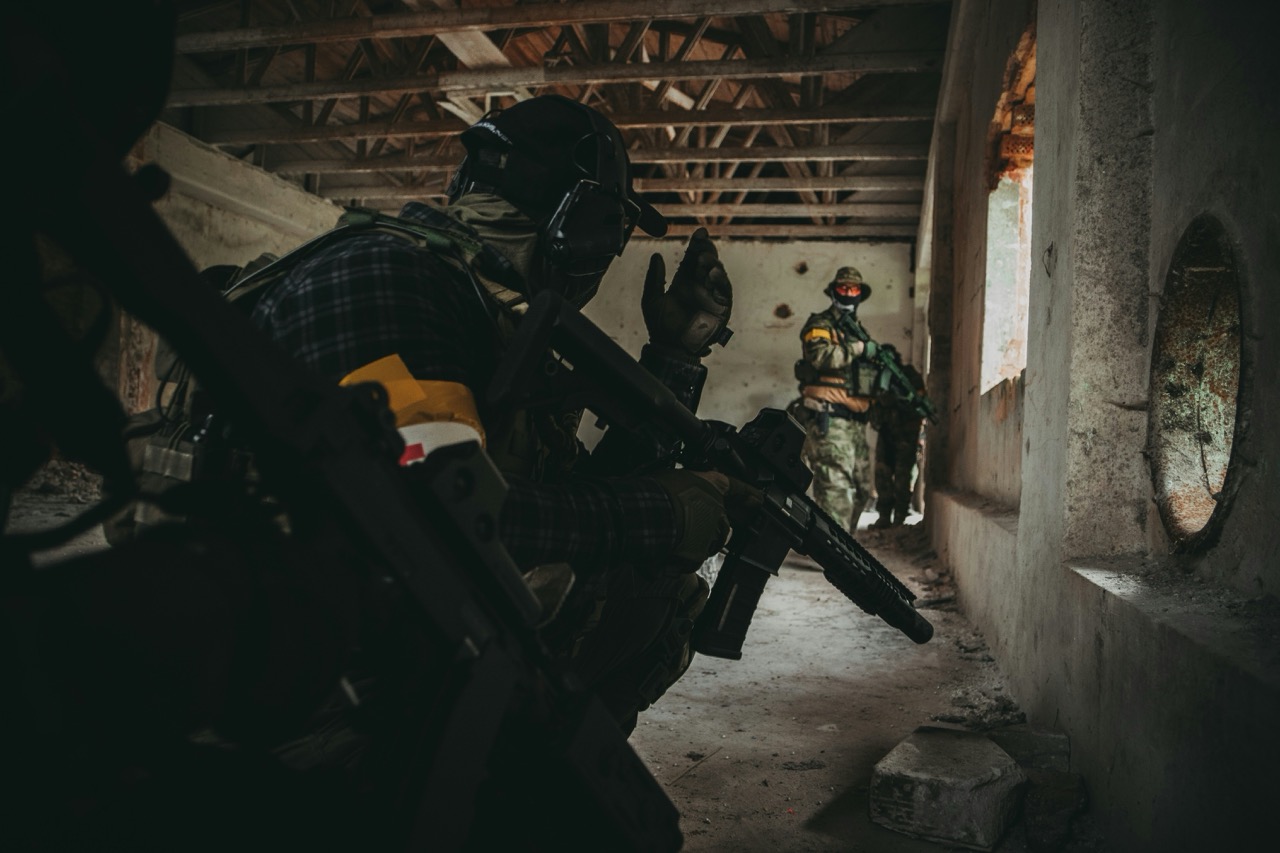
It's tempting to pick airsoft camouflage the way you'd pick a jacket: whatever pattern looks sharpest. The problem is that camouflage effectiveness has almost nothing to do with how convincing a pattern looks up close and everything to do with how it behaves against a specific background at a distance, in motion, and under real lighting conditions.
The Basic Mechanism Behind Camouflage
Camouflage generally works through one of two overlapping mechanisms: background matching, where colors and tones blend with the surrounding environment, and disruptive coloration, where contrasting shapes break up the visual outline of a human body so it doesn't register as a recognizable silhouette. Research using eye-tracking methods, summarized in a recent analysis of disruptive color efficiency in military camouflage patterns, found that patterns mixing multiple disruptive colors measurably slowed how quickly a target was visually detected in complex backgrounds like forest terrain compared to simpler, non-mixed patterns. In practice, this means a pattern's effectiveness is closely tied to how well its scale and color mix matches the visual complexity of the terrain it's used in, not just whether the colors look earthy.
Matching Pattern to Environment
Dense Woodland and Forest
Patterns with larger, high-contrast disruptive shapes in green, brown, and black tend to perform well here, since they're designed to break up outline against a visually busy backdrop of leaves, branches, and dappled light.
Open Fields and Dry Terrain
Lighter tan, khaki, and desert-toned patterns with less green content generally blend better against dry grass, sand, and light-colored terrain, where a dark woodland pattern can actually stand out as a solid dark shape.
Urban and CQB Environments
Gray, urban-tone, or low-contrast patterns tend to work better indoors and around concrete and painted surfaces, where woodland tones read as an obvious mismatch against man-made backgrounds.
Concealment Is More Than the Pattern
Military doctrine treats camouflage as only one part of concealment, alongside using actual terrain features and minimizing movement and silhouette. The observation-and-cover framework used in the U.S. Army's ATP 3-21.8 infantry doctrine treats cover, concealment, and observation as factors to be actively used, not passively worn. A perfectly matched pattern worn by someone standing upright and moving quickly in the open will still be spotted; a mediocre pattern used by someone who stays low, moves deliberately, and uses actual terrain for concealment will often go unnoticed longer.
A Practical Takeaway
- Buy for the environment you play in most often, not the pattern that photographs best
- If you play multiple environments regularly, a mid-tone, lower-contrast pattern is often a reasonable compromise over a highly specialized one
- Remember that how you move and use terrain will usually matter more than which pattern you're wearing
Scale and Distance Change What Works
A pattern's print scale, how large or small its individual shapes are, needs to roughly match the distance at which you expect to be viewed. Fine, small-scale patterns can blur into a flat, uniform color at longer distances, losing their disruptive effect exactly when it would matter most in open terrain. Larger, bolder patterns hold their disruptive shape better at range but can look coarse and obvious up close, which matters more in tight CQB environments where opponents are often only a few feet away. This is part of why a pattern designed for long-range woodland observation doesn't automatically translate well to a short-range indoor environment, independent of color palette.
Don't Overspend Chasing the "Perfect" Pattern
It's worth resisting the urge to buy a new, highly specific pattern for every field you visit. Beyond a certain point, movement discipline, staying low, using shadows and terrain features, and avoiding unnecessary silhouetting against open sky, contributes more to staying unseen than incremental improvements in pattern matching. A solid, general-purpose pattern paired with good field craft will consistently outperform an expensive, hyper-specific pattern paired with careless movement.
More from the blog
All posts →Essential Tools Every Airsoft Technician Should Own
A well-stocked toolbox turns gearbox surgery from a stressful gamble into a routine afternoon project.
August 26, 2026How to Clean and Maintain Your Airsoft Gun
A regular cleaning routine keeps your airsoft replica shooting straight and lasting longer, and most of it takes less time than a single game rotation.
August 25, 2026Radio Communication Basics for Airsoft Teams
A beginner-friendly introduction to using radios in airsoft: call signs, brevity, and the basic discipline that keeps a channel useful instead of chaotic.
August 24, 2026