Basic Fireteam Movement Tactics for Airsoft
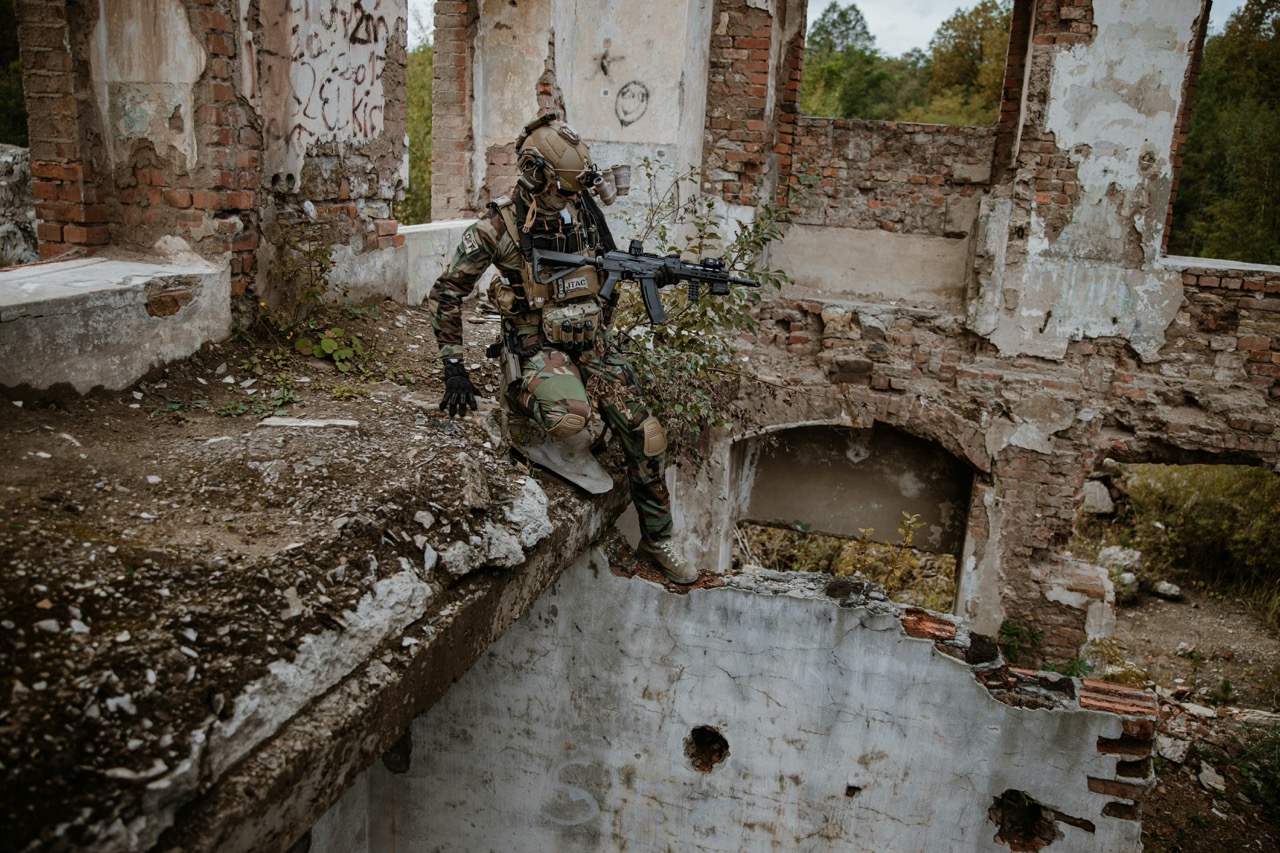
Most new airsoft squads move as a loose clump: everyone advances together, everyone stops together, and the first sign of contact usually catches the whole group exposed at once. Real infantry doctrine solves this problem with structured movement techniques built around one core idea, some part of the team is always positioned to observe and support while another part moves, and it translates into airsoft with almost no modification needed.
The Fireteam as the Basic Building Block
In U.S. Army doctrine, the fireteam, typically four soldiers, is the smallest element expected to move and fight as a coordinated unit rather than a collection of individuals. The Army's ATP 3-21.8 infantry doctrine describes fireteams built around complementary roles, a team leader, a rifleman, an automatic rifleman, and a grenadier, each with a specific job that supports the others rather than everyone doing the same thing at once. A four-person airsoft squad can map onto this almost directly: someone directing movement, someone providing a steady base of fire, and the rest maneuvering, even without formal role assignments beyond an evening's agreement.
Bounding Overwatch, the Core Technique
The single most useful movement technique to borrow is bounding overwatch. Split your team into two elements. One element halts in a covered position and observes likely threat directions while the other element moves to the next covered position. Once the moving element is set, the roles reverse: the element that just moved now provides overwatch while the other bounds past them. This keeps at least half the team ready to react at every point during the advance, rather than leaving the entire squad exposed and reacting from a standing start if contact happens mid-move.
Choosing Bounding Distance
How far each element moves before stopping depends entirely on available cover and visibility. In open terrain with long sightlines, shorter bounds between pieces of cover reduce how long anyone spends fully exposed. In dense woodland or indoor environments with short sightlines, bounds can be longer since visibility to a potential threat is more limited in the first place. The guiding question is always the same: can the overwatch element actually see and cover the ground the moving element is crossing, and is there real cover at the far end of the bound to stop at.
Putting It Into Practice
- Agree on hand signals or simple verbal calls for "moving" and "set" before the game starts, so transitions between elements don't require shouted coordination that gives your position away
- Identify your next piece of cover before you move, not while you're already moving toward it
- Keep bounds short enough that the moving element is never out of effective support range of the overwatch element
- Practice the basic two-element bound on a casual game day before trying to use it under real pressure in a competitive match
None of this requires formal training or specialized gear. It requires an agreement among your squad to move deliberately, in support of each other, rather than as a loose group hoping nothing goes wrong.
Common Mistakes New Squads Make
The most frequent failure is treating bounding overwatch as a suggestion rather than a discipline: an element starts moving before the overwatch element is actually set and watching, or the overwatch element gets distracted and stops covering the agreed direction. Both failures erase the entire benefit of the technique, since the whole point is that someone is always genuinely ready to react. Another common mistake is bounding too far in low-visibility terrain, moving well past the point where the overwatch element can still see and support the moving element, which leaves the moving element effectively alone despite technically following the structure.
Scaling Beyond a Single Fireteam
Larger squads can extend the same logic by treating two fireteams as the bounding elements instead of two individuals, with one team providing overwatch for the entire advance of the other. The core relationship stays identical regardless of scale: someone is always set and watching while someone else moves, and roles rotate as the advance continues. Even a two-person team can use a simplified version of this, one partner watching while the other moves a short distance, which is often the first version worth practicing before trying to coordinate a full squad.
More from the blog
All posts →Essential Tools Every Airsoft Technician Should Own
A well-stocked toolbox turns gearbox surgery from a stressful gamble into a routine afternoon project.
August 26, 2026How to Clean and Maintain Your Airsoft Gun
A regular cleaning routine keeps your airsoft replica shooting straight and lasting longer, and most of it takes less time than a single game rotation.
August 25, 2026Radio Communication Basics for Airsoft Teams
A beginner-friendly introduction to using radios in airsoft: call signs, brevity, and the basic discipline that keeps a channel useful instead of chaotic.
August 24, 2026