Understanding Cover vs Concealment in Airsoft Gameplay
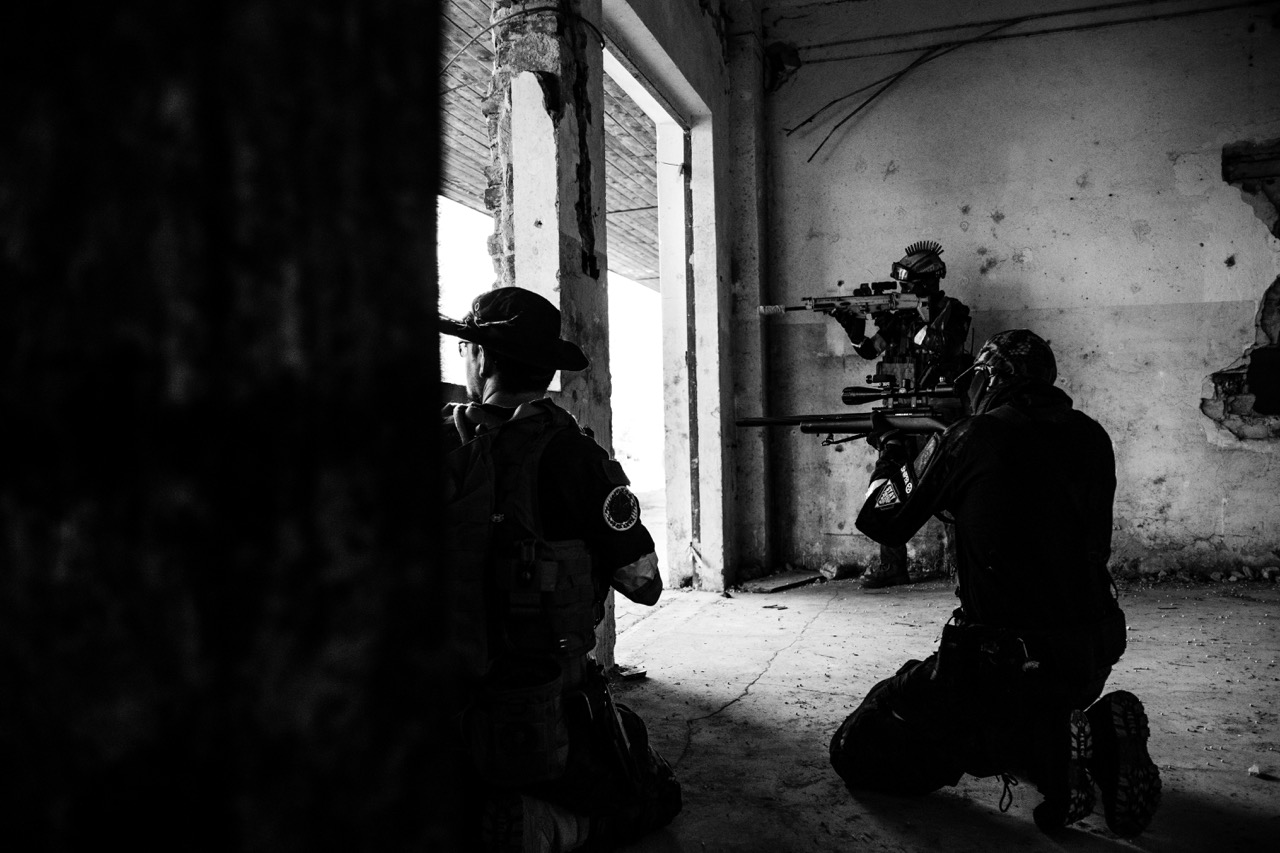
New players tend to use "cover" for anything that hides them, whether that's a solid concrete barrier or a thin patch of tall grass. Experienced players draw a hard line between the two, and that distinction changes decisions constantly during a game: where you choose to stand, where you choose to fight from, and where you choose to retreat to when things go wrong.
The Core Distinction
Cover is anything that physically stops a projectile. In airsoft that includes concrete walls, thick trees, earth berms, and solid structures. Concealment is anything that hides you from view without stopping a projectile at all: tall grass, bushes, smoke, shadow, or a thin wooden fence. This exact distinction is spelled out in the U.S. Army's ATP 3-21.8, which treats cover and concealment as two of the core terrain factors soldiers are trained to actively evaluate, alongside observation and fields of fire, rather than something to notice only after taking a hit. The practical airsoft consequence is straightforward: being unseen and being protected from being hit are not the same thing, and confusing the two is one of the most common tactical mistakes new players make.
Why the Confusion Is Dangerous
A player crouched behind a bush feels safe because they can't be seen easily. In airsoft that feeling is often justified in practice, since a hidden player who isn't spotted never gets shot at regardless of what's actually blocking BBs. The risk shows up the moment that concealment fails, whether through movement, a rustling bush, or simply being spotted from an angle the vegetation doesn't cover. At that point, a player who believed they were behind cover discovers they were only behind concealment, with nothing actually stopping the BB now heading their way. Treating concealment as cover works right up until it doesn't, and the failure tends to be sudden rather than gradual.
Using Both Deliberately
When Cover Is Available
Prioritize actual cover whenever a firefight is likely or already underway. Move between solid pieces of cover using the bounding techniques common to fireteam movement, and treat any position you plan to exchange fire from as needing real cover, not just a visual screen.
When Only Concealment Is Available
Concealment still has real tactical value, particularly for movement, flanking, and observation, where staying unseen matters more than surviving a direct hit that never comes because no one spotted you in the first place. Use concealment to move unseen between positions of actual cover, rather than as a place to make a stand.
A Simple Habit to Build
- Before settling into any position, ask specifically whether it would stop a BB, not just whether it hides you
- Treat thin fences, foliage, and shadows as concealment only, useful for movement and observation, not for standing and trading shots
- When retreating under fire, prioritize the nearest actual cover over the nearest concealment, even if the concealment is closer
Once this distinction becomes automatic, positioning decisions across an entire game start to improve, since so much of tactical movement comes down to correctly reading what the terrain in front of you actually offers.
Reassessing as a Position Changes
Cover and concealment aren't fixed properties of a location; they can change as a game develops. A tree that offered solid cover from one direction offers nothing against fire from a different angle once an opponent maneuvers around it. A field of tall grass that concealed a prone player effectively can lose that value the moment the player stands or moves, drawing visible motion that undermines the very thing that made the position useful. Treat cover and concealment as directional and situational rather than as a permanent label attached to a specific object, and reassess your position any time the angle of likely fire changes.
Teaching This to Newer Players
This distinction is one of the easiest and most valuable things an experienced player can pass on to newcomers, since it changes decision-making immediately once it clicks. A simple way to reinforce it during a casual game is to periodically ask a new player, while they're behind something, whether they believe it would actually stop a BB, and why. Getting people into the habit of asking that question themselves, rather than just accepting any nearby object as safety, builds better instincts faster than almost any other single piece of tactical advice.
More from the blog
All posts →Essential Tools Every Airsoft Technician Should Own
A well-stocked toolbox turns gearbox surgery from a stressful gamble into a routine afternoon project.
August 26, 2026How to Clean and Maintain Your Airsoft Gun
A regular cleaning routine keeps your airsoft replica shooting straight and lasting longer, and most of it takes less time than a single game rotation.
August 25, 2026Radio Communication Basics for Airsoft Teams
A beginner-friendly introduction to using radios in airsoft: call signs, brevity, and the basic discipline that keeps a channel useful instead of chaotic.
August 24, 2026