Communication Tactics for Airsoft Squads
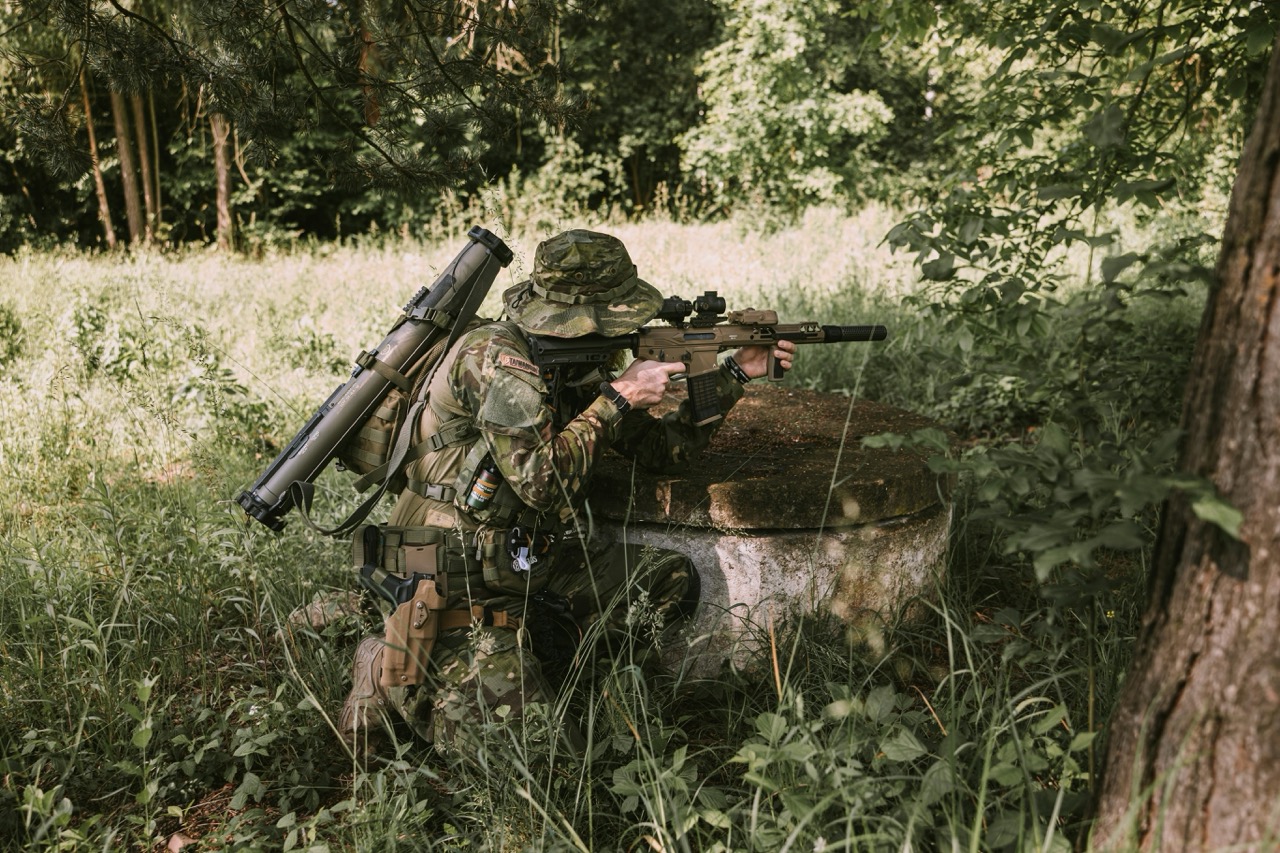
A squad that communicates well will consistently outperform a more skilled squad that doesn't, because half of tactical decision-making in airsoft is simply knowing where the enemy is, where your teammates are, and what's happening around a corner you can't see. Building that shared picture requires more structure than shouting whatever comes to mind mid-engagement.
Why Structure Beats Volume
Untrained communication tends to be loud, constant, and low on useful information: general chatter, background noise, and panicked shouting that competes with the callouts that actually matter. Formal radio and communication doctrine solves this with concepts like brevity and net discipline, keeping transmissions short, purposeful, and limited to information the team actually needs. The U.S. Army's ATP 6-02.53 on tactical radio operations builds its entire structure around exactly this idea: clear call signs, minimal unnecessary chatter, and a shared vocabulary that lets short transmissions carry a lot of meaning quickly. An airsoft squad doesn't need military-grade net discipline, but adopting the underlying principle, say less, say it clearly, and say only what matters, immediately improves how usable your team's communication actually is under pressure.
Layering Communication Methods
Verbal Callouts
Reserved for information that needs to reach the whole squad immediately: enemy contact, direction of fire, and status changes like someone being hit. Keep these short and consistent, using the same phrasing every time so teammates don't have to parse unfamiliar language mid-firefight.
Hand Signals
Useful when noise discipline matters, moving through a quiet flanking route or waiting near an objective, and for close-range coordination where a whispered word might carry too far. A small shared set covering movement, halt, enemy spotted, and direction is enough for most squads; you don't need an extensive signal vocabulary to get real value from this.
Radios
Best for coordination across distance or between separated elements who can't see or hear each other directly, particularly in larger woodland games or multi-team scenarios. The same brevity principle applies here even more strongly, since radio traffic that runs too long or too often can step on someone else's urgent transmission at exactly the wrong moment.
Building a System Before Game Day
- Agree on a small, consistent set of callouts and hand signals before the game starts, not mid-engagement
- Assign a clear point of contact for radio traffic so multiple people aren't transmitting over each other
- Practice the system during a low-stakes game before relying on it in a competitive match
- Default to silence over unnecessary chatter; every transmission should answer the question "does the team need to know this right now"
A squad that has actually practiced its communication system together will consistently move and react faster than one relying on ad-hoc shouting, even if every individual player is equally skilled.
Handling Multiple Simultaneous Callouts
In a busy engagement, several teammates may all have something worth saying at once, contact reports, ammo status, a spotted flank, and without some agreed priority, the important information gets lost in overlapping noise. A simple fix is agreeing that contact and immediate threat reports always take priority over status updates, and that anyone with a genuinely urgent callout should lead with a short flag word before the detail, something as simple as saying "contact" first and the direction second, so listeners immediately know to focus even if the rest of the sentence is momentarily unclear.
Keeping the System Honest Over Time
Communication systems tend to decay if nobody maintains them: callouts drift, new players adopt different phrasing, and the discipline that worked well in an early practice session erodes over a season of casual play. Revisiting the system periodically, briefly reviewing what's working and what's causing confusion after a game day, keeps a squad's communication sharp rather than letting it slowly become as chaotic as the shouting it was meant to replace.
More from the blog
All posts →Essential Tools Every Airsoft Technician Should Own
A well-stocked toolbox turns gearbox surgery from a stressful gamble into a routine afternoon project.
August 26, 2026How to Clean and Maintain Your Airsoft Gun
A regular cleaning routine keeps your airsoft replica shooting straight and lasting longer, and most of it takes less time than a single game rotation.
August 25, 2026Radio Communication Basics for Airsoft Teams
A beginner-friendly introduction to using radios in airsoft: call signs, brevity, and the basic discipline that keeps a channel useful instead of chaotic.
August 24, 2026