How to Play the Sniper Role Effectively in Airsoft
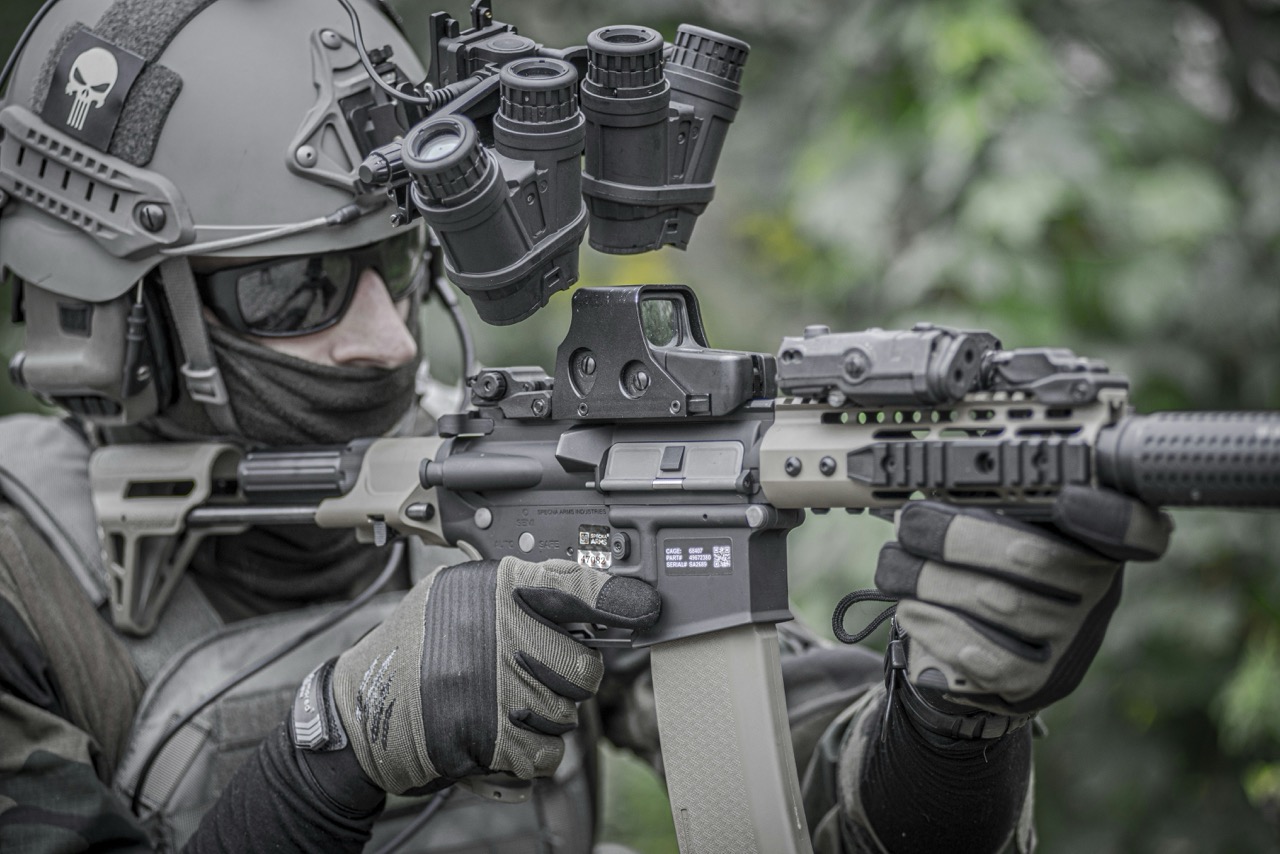
The airsoft sniper role gets romanticized more than almost any other position in the hobby, usually around the idea of a single, dramatic long-range shot. In practice, the role is defined far more by patience, disciplined positioning, and constant observation than by marksmanship alone, and players who approach it that way tend to contribute a lot more to their team than players chasing a highlight-reel moment.
A Useful Real-World Analog
Formal military doctrine actually separates the sniper role from a related but distinct position, the designated marksman, and the comparison is instructive for airsoft. The U.S. Army's ATP 3-21.8 describes the squad-designated marksman as a rifleman equipped with an optic-enhanced weapon who stays fully integrated with the rest of the squad rather than operating independently, engaging targets the squad's standard weapons might struggle to hit accurately at range, while remaining part of the team's overall movement and fire plan. That's a closer model for most airsoft sniper play than the fully independent, self-sufficient sniper image, since most airsoft games benefit far more from a marksman who stays coordinated with the squad than from a lone operator working entirely apart from the team.
Positioning Over Marksmanship
A well-chosen position that offers a long, defensible sightline with real cover and a viable withdrawal route will produce far more useful engagements than a mediocre position defended by pure shooting skill. Prioritize elevated ground or a position with genuine cover behind you as well as in front, and always identify a fallback route before settling in, since a sniper position with no way to disengage becomes a trap the moment it's spotted.
Patience and Observation
A large part of the role is simply watching: tracking enemy movement patterns, identifying key terrain the rest of your team can use, and relaying that information rather than always taking the shot yourself. This overlaps heavily with the broader skill of situational awareness, which research on dynamic environments describes as perceiving relevant elements, understanding what they mean, and projecting how the situation will develop, exactly the mental process a good marksman applies constantly while watching a lane rather than only in the moment before pulling the trigger.
Staying Integrated With Your Team
- Communicate what you observe, enemy positions, likely routes, numbers, even when you're not the one engaging
- Coordinate repositioning with your squad rather than relocating independently and leaving them without the coverage they were relying on
- Accept that many rounds will involve zero shots fired if the position and information you provide are valuable enough on their own
- Have a realistic plan for close-range self-defense, since a marksman caught without cover at close range is at a real disadvantage against faster-firing replicas
Played this way, the role becomes less about a single dramatic shot and more about consistently making your squad's decisions better, which tends to be a lot more valuable over a full game day than it looks from the outside.
Equipment Realities Worth Knowing
Sniper-class airsoft replicas typically trade rate of fire for range and accuracy, often single-shot spring or bolt-action platforms rather than the automatic electric replicas most other players carry. That tradeoff means a designated marksman is genuinely more vulnerable in a fast, close-range exchange than a rifleman carrying a faster-firing platform, which reinforces why position selection and a viable retreat route matter as much as the shot itself. Knowing this limitation ahead of time, rather than discovering it mid-engagement, should shape how aggressively you're willing to hold a position once it's been spotted.
Managing the Mental Side of the Role
Long stretches without firing a shot can be genuinely tedious, and it's tempting to abandon a good position out of boredom or to chase a more active part of the map. Resisting that urge, and trusting that a well-placed marksman is contributing even during quiet stretches, is as much a discipline as the fieldcraft itself. Setting a personal rule, staying in position for a set amount of time or until a specific condition changes, rather than leaving on impulse, helps maintain that discipline over a full game day.
More from the blog
All posts →Essential Tools Every Airsoft Technician Should Own
A well-stocked toolbox turns gearbox surgery from a stressful gamble into a routine afternoon project.
August 26, 2026How to Clean and Maintain Your Airsoft Gun
A regular cleaning routine keeps your airsoft replica shooting straight and lasting longer, and most of it takes less time than a single game rotation.
August 25, 2026Radio Communication Basics for Airsoft Teams
A beginner-friendly introduction to using radios in airsoft: call signs, brevity, and the basic discipline that keeps a channel useful instead of chaotic.
August 24, 2026