Defensive Position Tactics for Objective-Based Airsoft Games
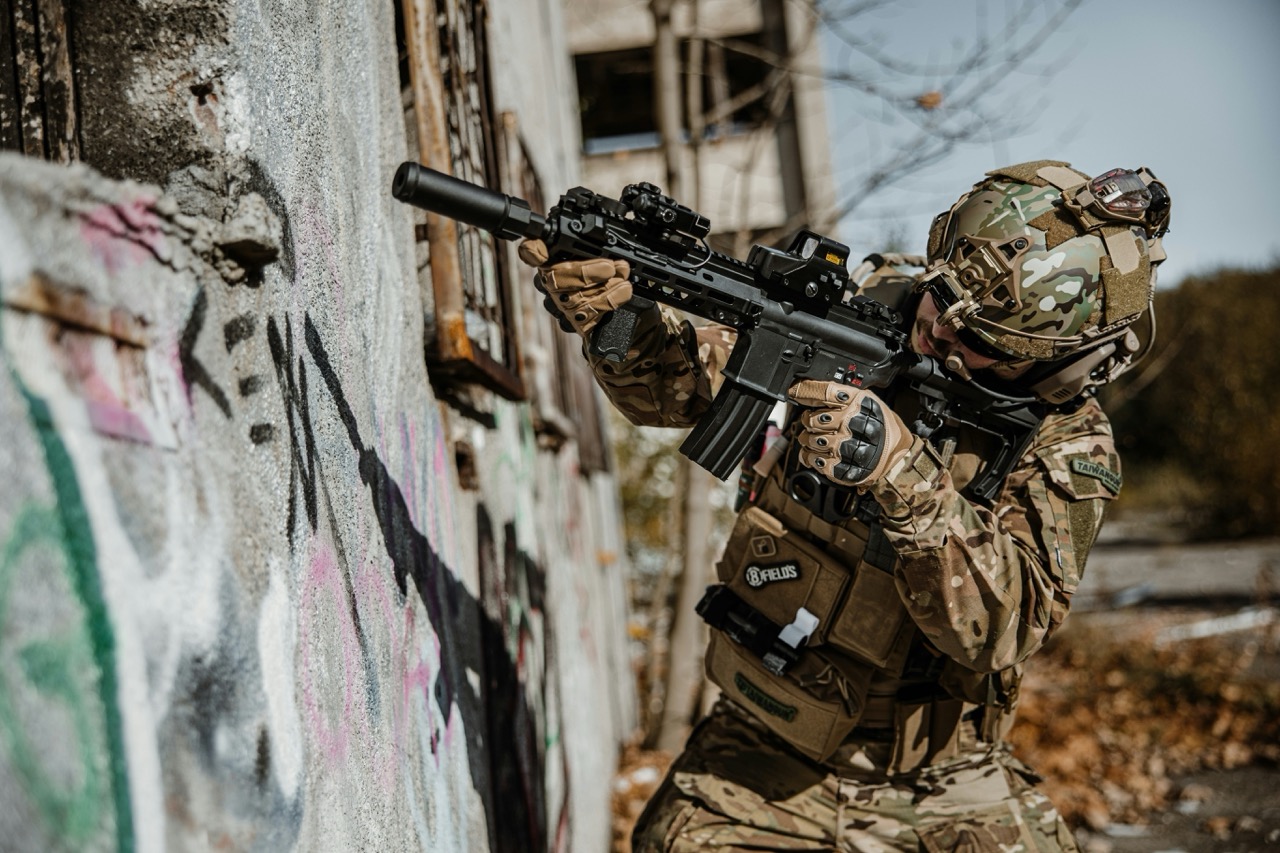
Defending an objective, a flag, a base, a control point, feels straightforward until it's actually tested: an opponent probing from an unexpected angle, a position that runs out of ammunition or people at the wrong moment, or a defense that never adapts once the initial setup is proven wrong. Good defensive play is a deliberate structure, not just a group of players standing near the objective.
Mutual Support Between Positions
The U.S. Army's ATP 3-21.8 frames defensive planning around positions that mutually support each other, each position covering the ground that another position can't, so that no single spot on the perimeter is left completely unwatched. In airsoft terms, this means avoiding the common mistake of clustering everyone at the single most obvious approach while leaving other routes to the objective essentially unguarded. Spreading positions out, while keeping them close enough to reinforce each other quickly, covers more ground without any individual position being left to fend for itself against a determined push.
Choosing Individual Positions
Each defensive position should have genuine cover, a clear field of fire onto a likely avenue of approach, and ideally a route to reposition or fall back if it's flanked or overwhelmed. A position with excellent cover but no visibility of the approach it's meant to guard isn't actually doing its job, and a position with great visibility but no cover is exposed the moment it actually gets used.
Depth, Not Just a Single Line
A single line of defenders is vulnerable to being pierced in one spot and then rolled up from behind. Layering positions with some depth, a secondary position or two behind the main line, gives the defense somewhere to fall back to and regroup if the front line is breached, rather than the entire defense collapsing the moment one position fails.
Staying Flexible
A defensive setup that never adapts is only as good as its first guess about where the attack will come from. Assign someone to actively watch for probing attacks, an opponent testing multiple approaches to find the weak point, and be ready to reposition or reinforce based on what that probing reveals, rather than treating the initial defensive layout as fixed for the entire round.
Practical Setup Checklist
- Identify every realistic avenue of approach to the objective, not just the most obvious one
- Assign positions with overlapping, mutually supporting fields of fire rather than everyone facing the same direction
- Keep a small reserve or fallback position rather than committing every player to the initial line
- Maintain communication between positions so a probe or flank spotted in one spot gets relayed before it develops into a full breach
A well-built defense feels almost boring when it works, since a genuinely well-covered objective rarely produces the dramatic last-stand moments people picture; it just quietly holds because every approach was accounted for.
Rotating Players Without Weakening the Line
Long objective-holding rounds eventually run into fatigue and attention decline, the same issue that affects awareness generally, and defenders who have been watching the same lane for an hour tend to get less sharp over time. Rotating players through positions periodically, rather than leaving the same person locked into the same spot for an entire round, helps maintain alertness, provided the rotation is planned so the objective is never briefly left uncovered during the swap itself.
Deciding When to Counterattack
A purely passive defense can eventually be worn down by an opponent who has unlimited time to probe for weaknesses. Recognizing when a defense has spotted a clear opportunity, an overextended attacker, a stalled push with an exposed flank, and shifting briefly to a counterattack can disrupt an opponent's momentum in a way that pure holding never will. This is a judgment call rather than a fixed rule, and it depends on having enough depth in the defense that committing a portion of it to a counterattack doesn't leave the objective genuinely exposed.
More from the blog
All posts →Essential Tools Every Airsoft Technician Should Own
A well-stocked toolbox turns gearbox surgery from a stressful gamble into a routine afternoon project.
August 26, 2026How to Clean and Maintain Your Airsoft Gun
A regular cleaning routine keeps your airsoft replica shooting straight and lasting longer, and most of it takes less time than a single game rotation.
August 25, 2026Radio Communication Basics for Airsoft Teams
A beginner-friendly introduction to using radios in airsoft: call signs, brevity, and the basic discipline that keeps a channel useful instead of chaotic.
August 24, 2026